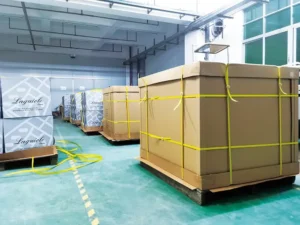
Getting your product ready for a major retail launch1 is tough. You have a great product, but getting it assembled into displays, perfectly labeled, and shipped to hundreds of stores on time feels like a huge mountain to climb. The logistics are overwhelming and mistakes are expensive.
Co-packing, also known as contract packaging2, is the process of outsourcing the assembly and packaging of your products. For CPG brands3, this often involves sending bulk products to a specialized company that then assembles them into retail-ready displays4, kits, or multi-packs according to specific retailer requirements.

I remember the first time we had a massive order for a big-box retailer. We tried to handle all the pack-out in-house. It was chaos. We had boxes everywhere, labels were getting mixed up, and we almost missed our shipping deadline. That experience taught me a valuable lesson: sometimes, you need to bring in the experts. Co-packing partners are those experts, and they can be the key to scaling your CPG brand without losing your mind. Let's dive into what co-packing is and how it can help you grow.
What Is Co-Packing and When Do CPG Brands Need It?
Struggling to keep up with packaging demands as your brand grows? You're not alone. Managing the complex process of getting products retail-ready can quickly become a major bottleneck, pulling focus from your core business of creating and marketing great products.
Co-packing is a service where a third-party company handles all your packaging needs, from assembling products into displays to labeling and distribution. CPG brands3 need co-packing when they are scaling up for large retail rollouts5, lack the in-house equipment or labor, or want to enter new markets quickly6 without a large capital investment.
![An image illustrating the decision point between in-house and outsourced co-packing]https://packwins.com/wp-content/uploads/2021/05/3Doodler-Printing-Pen-Half-Pallet-Corrugate-Display-Stands-1.jpg)
Deciding to outsource is a big step. For my brand, the tipping point was a huge promotional campaign7 with a major retailer. We simply didn't have the space or the manpower to assemble thousands of point-of-purchase (POP) displays8. Trying to do it ourselves would have meant renting a temporary warehouse9 and hiring a small army of temporary workers. The costs and risks were just too high. Outsourcing to a co-packer allowed us to leverage their expertise, existing infrastructure, and trained workforce. This move not only saved us money but also ensured the displays were assembled correctly and arrived at the distribution centers on time. If you're facing a similar growth spurt, or if you find that packaging logistics are eating up too much of your time and resources, it's probably time to consider a co-packing partner.
When to Outsource vs. Keep In-House
The decision to outsource co-packing or keep it in-house depends on several factors. Here's a breakdown to help you decide:
| Factor | Outsource to a Co-Packer | Keep In-House |
|---|---|---|
| Volume | Ideal for high-volume or seasonal production runs. | Better for low, steady volume or initial small batches. |
| Cost | Lower upfront investment, but ongoing service fees. | High initial capital for equipment and labor, but potentially lower per-unit cost long-term. |
| Expertise | Access to specialized knowledge of retail compliance10 and packaging efficiency. | Requires building and training a skilled team. |
| Scalability | Easily scale production up or down to meet market demand. | Scaling can be slow and expensive. |
| Control | Less direct control over the packaging process. | Complete control over quality and branding. |
Common Types of Co-Packing for Retail Products?
You've got a fantastic product, but getting it onto retail shelves involves more than just a pretty box. Retailers have specific requirements for how products are presented, and failing to meet them can mean your product never even makes it to the sales floor.
Common types of co-packing for retail products include assembly of POP displays11, kitting multiple items12 into a single package, loading products into retail-ready trays (like PDQs), applying labels and stickers, and shrink-wrapping products13 for multi-packs or club stores.

I learned this the hard way with a line of water bottles. We had a great product, but we initially shipped them in plain master cartons. A major retailer told us that to get prime placement, we needed a custom POP display. We had to quickly find a partner who could not only build the displays but also pack them out with our bottles. This experience opened my eyes to the world of co-packing services. It's not just about putting things in a box; it's about creating a retail-ready solution that grabs shoppers' attention and makes it easy for store associates to stock the shelves. From creating variety packs to building complex, multi-component displays, co-packers are the unsung heroes of the retail world.
A Deeper Look at Co-Packing Services
Understanding the specific services a co-packer offers is key to finding the right partner. Here are some of the most common services you'll encounter:
- Assembly and Kitting: This involves taking multiple individual items (SKUs) and packaging them together as a single new unit. Think gift sets, variety packs, or promotional bundles. This is a popular service for brands looking to increase the perceived value of their products.
- POP Display Pack-Out: This is a crucial service for in-store marketing. The co-packer receives your empty displays and your product, and then assembles and fills the displays according to your specifications. This ensures your product is presented consistently and effectively in every store.
- Retail-Ready Packaging (RRP) / Pretty Darn Quick (PDQ) Trays: These are specially designed trays or cases that can go directly from the shipping carton to the retail shelf with minimal handling by store employees. Co-packers load your products into these trays, making it easier for retailers to stock your products.
- Labeling and Re-labeling: Co-packers can apply price stickers, promotional labels, or even new UPC barcodes to your products. This is especially useful for adapting products for different retailers or promotions.
- Shrink-Wrapping: This is often used to create multi-packs (e.g., a two-pack of shampoo) or to bundle items together for club stores like Costco. It provides a secure and professional-looking finish.
How Co-Packing Supports Retail-Ready Packaging and POP Displays?
You've invested in a stunning POP display, but how do you get it from the factory to the retail floor, fully stocked and ready to sell? The logistics can be a nightmare, especially when you're dealing with hundreds or thousands of stores.
Co-packing is the essential link that transforms your empty POP displays and bulk product into fully assembled, retail-ready units. Co-packers handle the entire process, from building the display structure to carefully arranging each product, ensuring it arrives at the store ready for immediate placement on the sales floor.

I once worked with a brand that had designed an amazing floor display. The problem was, they shipped the flat displays and the product to the stores separately, expecting the store staff to assemble them. The result? Most of the displays were never put together correctly, if at all. This is where a co-packer becomes invaluable. They are experts in display assembly and pack-out14. They ensure that every single display is built to the correct specifications and that the products are perfectly arranged to maximize visual appeal. By using a co-packer, you guarantee that your investment in a great display pays off with flawless execution at the store level.
The Synergy Between Display Manufacturing and Co-Packing
The most successful retail launches happen when the display design and the co-packing process are considered together from the very beginning. At Packwins, we specialize in designing and manufacturing cardboard displays that are not only visually appealing but also optimized for efficient pack-out.
Here's how we think about the process:
- Design for Assembly: We design displays with the co-packer in mind. This means creating structures that are intuitive and quick to assemble, which reduces labor costs for the co-packer and, ultimately, for you.
- Structural Integrity: A display needs to look good, but it also needs to survive the journey to the store. We engineer our displays to be robust, ensuring they can be packed, shipped, and moved onto the sales floor without damage.
- Clear Instructions: We provide detailed assembly instructions and planograms (diagrams showing product placement) to the co-packer. This eliminates guesswork and ensures consistency across all your displays.
- Material Efficiency: By designing for efficient material use, we can help reduce the overall cost of the display, freeing up more of your budget for the products themselves.
By integrating the display design and manufacturing process with the needs of the co-packer, we help create a seamless workflow that gets your products to market faster and more cost-effectively.
Cost Breakdown: Co-Packing vs Doing It In-House?
As your brand grows, you'll inevitably face the "build vs. buy" decision for your packaging operations. The costs aren't always as straightforward as they seem, and looking only at the per-unit price can be misleading.
Outsourcing to a co-packer eliminates the need for large upfront investments in equipment, facilities, and a skilled workforce. While you pay a service fee, you gain cost efficiency through the co-packer's economies of scale15. In-house operations require significant capital but may offer lower per-unit costs over the long term.

I once ran the numbers for a beverage company that was considering bringing their variety pack assembly in-house. They were focused on the co-packer's per-pack fee. But when we factored in the cost of leasing a warehouse space, buying a shrink-wrapping machine, hiring and training staff, and the increased insurance liability, the picture changed dramatically. The in-house cost per pack was actually higher, not to mention the added management headache. Co-packers spread their overhead costs across multiple clients, which is why they can often be more cost-effective, especially for brands with fluctuating or seasonal demand.
Co-Packing vs. In-House Fulfillment: A Detailed Comparison
| Cost Factor | Co-Packing (Outsourced) | In-House Fulfillment |
|---|---|---|
| Labor | Included in the service fee. No need to hire, train, or manage a packaging team. | A significant ongoing expense, including wages, benefits, and training. |
| Equipment | No investment needed. Co-packers have specialized machinery for various tasks. | Requires a large capital investment in packaging machinery, plus maintenance costs. |
| Facility | No need for dedicated warehouse space for packaging operations. | Requires leasing or buying a warehouse, with associated costs like rent, utilities, and insurance. |
| Error Risk | Experienced co-packers have quality control processes to minimize errors. | Higher risk of errors, especially when starting out, which can lead to costly chargebacks from retailers. |
| Scalability | Flexible and easy to scale production up or down as needed. | Difficult and expensive to scale quickly. May require additional investment in equipment and staff. |
| Hidden Costs | Can include setup fees, minimum run charges, or storage fees. | Includes costs like employee turnover, insurance, and compliance management. |
Co-Packing and Retail Compliance (Walmart, Costco, Target)?
Getting your product into major retailers like Walmart, Costco, or Target is a huge win. But if your shipments don't meet their strict compliance requirements, that win can quickly turn into a loss with hefty fines and rejected shipments.
Major retailers have detailed and non-negotiable requirements for everything from barcode placement and case pack counts to pallet configurations. Co-packers who specialize in retail compliance10 are experts in these routing guides16 and ensure your products are packed and labeled perfectly to avoid costly chargebacks.

I'll never forget the panic of a client who received a massive chargeback from Walmart. The issue? The labels on their master cartons were placed a few inches too low, making them difficult for the automated scanners at the distribution center to read. This seemingly small mistake cost them thousands of dollars. An experienced co-packer would have caught that immediately. They live and breathe retailer routing guides16. They know the exact specifications for pallet height for Costco, the required case labeling for Target, and the latest RFID tagging mandates from Walmart. Partnering with a compliance-savvy co-packer is like having an insurance policy against these expensive errors.
Navigating the Maze of Retailer Requirements
Retailer compliance can be incredibly complex, with each major retailer having its own unique set of rules. A good co-packer will be an expert in these, but it's important for you as the brand manager to understand the key areas of focus.
Here's a checklist of what to look for in a co-packer to ensure retail compliance10:
- Experience with Major Retailers: Do they have a proven track record of shipping to Walmart, Costco, Target, and other big-box stores? Ask for references.
- Knowledge of Routing Guides: Can they demonstrate a deep understanding of the specific packaging, labeling, and palletization requirements for your target retailers?
- Labeling Accuracy: They must have systems in place to ensure every unit, case, and pallet has the correct, scannable GS1-compliant barcodes (UPC, GTIN, SSCC) in the right location.
- Palletization Expertise: They need to be able to build pallets to the exact specifications of each retailer, including size, stacking pattern, weight limits, and stretch-wrapping standards.
- Quality Control: What are their processes for catching errors before a shipment leaves their facility? A small mistake multiplied by thousands of units can be a financial disaster.
- Adaptability: Retailer requirements change. Your co-packer needs to stay up-to-date on the latest mandates to keep you compliant.
When to Combine Manufacturing + Co-Packing for Faster Launches?
In today's fast-paced retail environment, speed to market is everything. The longer it takes to get your product from the factory to the store shelf, the more sales you're missing out on. A disjointed supply chain with multiple vendors can create delays and communication breakdowns.
Integrating POP display manufacturing with co-packing services under one roof or through a tightly coordinated partnership streamlines the entire process. This "one-stop-shop" approach reduces lead times, minimizes shipping costs between vendors, and ensures a seamless transition from production to retail-ready assembly, resulting in a faster market launch.

I've seen brands struggle with this firsthand. They'll have their displays manufactured at one facility, their product at another, and then ship everything to a third-party co-packer for assembly. The coordination is a logistical nightmare. If the displays are delayed, the entire co-packing schedule is thrown off. By combining manufacturing and co-packing, you eliminate these friction points. As soon as the displays are produced, they can move directly to the co-packing line to be filled with the product. This integrated approach not only saves time and money but also gives you a single point of contact, simplifying communication and project management.
The Power of a Single, Coordinated Workflow
At Packwins, we are experts in designing and manufacturing cardboard POP displays. While we are based in China, we have built a network of trusted co-packing partners in the US, AU, UK, Canada, and Germany. This allows us to offer a coordinated workflow that provides the cost benefits of overseas manufacturing with the logistical advantages of domestic co-packing.
Here's how our integrated approach benefits your brand:
- Factory -> Display Manufacturing -> Co-Packing -> Retail DC: We manage the process from start to finish. We manufacture your displays at our facility, then ship them directly to our co-packing partner in your target market. This eliminates the need for you to coordinate between multiple vendors.
- Reduced Lead Times: By cutting out the extra shipping leg from a separate display manufacturer to the co-packer, we can shave weeks off your launch timeline.
- Cost Savings: Consolidating shipping and reducing handling steps results in significant cost savings.
- Improved Quality Control: With a single, integrated process, there is less chance of damage to the displays during transit and a clearer line of accountability.
- Seamless Communication: You have one primary point of contact for both the display manufacturing and the co-packing coordination, making project management much simpler.
This model is especially powerful for brands looking to launch new products or promotions quickly and efficiently.
Choosing the Right Co-Packing Partner for CPG Growth?
Selecting a co-packing partner is one of the most critical decisions you'll make as you scale your CPG brand. The right partner will be an extension of your team, helping you grow efficiently. The wrong one can lead to missed deadlines, quality issues, and a damaged reputation.
The right co-packing partner for CPG growth is one that has specific experience in your product category, can scale with your volume needs, has rigorous quality control processes, and demonstrates excellent communication and transparency. Look beyond price and evaluate their expertise in retail compliance and POP display pack-out.

Early in my career, I made the mistake of choosing a co-packer based solely on the lowest price. It was a disaster. They were a generalist fulfillment center and had no experience with the specific requirements of our retail partners. We ended up with incorrectly labeled products and poorly assembled displays. It was a costly lesson. Now, I always advise brands to think of choosing a co-packer like hiring a key employee. You need to do your due diligence, check their references, and make sure they are a good cultural fit. A true partner will not just pack your products; they will offer insights and suggestions to improve your packaging and processes.
Your Decision Checklist for Selecting a Co-Packer
When evaluating potential co-packing partners, use this checklist to ensure you're making a well-informed decision:
- ✅ Industry Experience: Do they have experience with your specific type of product (e.g., food and beverage, cosmetics, consumer electronics)?
- ✅ Retailer Expertise: Have they successfully packed and shipped products to your target retailers (Walmart, Costco, Target, etc.)?
- ✅ POP Display Experience: If you use in-store displays, do they have the skills and space to handle complex assembly and pack-out?
- ✅ Scalability: Can they handle your current volume, and more importantly, can they grow with you? Ask about their capacity and minimum order quantities.
- ✅ Quality Control: What are their quality assurance processes? How do they ensure accuracy in counting, labeling, and assembly?
- ✅ Technology and Transparency: What systems do they use for inventory management and order tracking? Can they provide real-time visibility into your projects?
- ✅ Communication: How do they handle communication? Is there a dedicated project manager for your account?
- ✅ Location: Is their facility strategically located to minimize shipping costs to your retailers' distribution centers?
- ✅ Certifications: Do they have any necessary certifications for your industry (e.g., FDA registered, organic certified)?
- ✅ Financial Stability: Is the co-packer a financially stable business that you can rely on for a long-term partnership?
Conclusion
Choosing the right co-packing strategy is crucial for scaling your CPG brand. It's not just about outsourcing a task; it's about building a partnership that supports your growth and gets your products onto retail shelves efficiently and correctly.
Plan your co-packing needs during the display design phase, not after. Thinking about the entire process from the start will save you time, money, and headaches down the road.
Understanding the complexities of a major retail launch can help you prepare better and avoid common pitfalls. ↩
Exploring contract packaging can reveal how outsourcing can streamline your operations and reduce costs. ↩
Learning why CPG brands rely on co-packing can help you decide if it's the right move for your business. ↩
Discovering the process behind retail-ready displays can enhance your product presentation strategy. ↩
Effective scaling strategies can ensure your product meets demand without compromising quality. ↩
Entering new markets swiftly can expand your reach and increase revenue without heavy upfront costs. ↩
Co-packing can ensure your promotional materials are ready and distributed efficiently, maximizing impact. ↩
Understanding the role of POP displays can improve your in-store marketing and boost sales. ↩
Understanding the implications of temporary warehousing can help you make informed logistical decisions. ↩
Meeting retail compliance is crucial to avoid fines and ensure your products are accepted by major retailers. ↩
Knowing the assembly process can help ensure your displays are effective and attract customers. ↩
Kitting can increase perceived value and encourage bulk purchases, boosting sales. ↩
Shrink-wrapping provides a secure and professional finish, appealing to bulk-buying customers. ↩
Proper assembly and pack-out ensure your displays are visually appealing and ready for sale. ↩
Economies of scale can reduce costs and improve efficiency, making co-packing more attractive. ↩
Understanding routing guides can prevent costly errors and ensure smooth distribution to retailers. ↩