

Getting your product into Sam's Club is a huge win, but their strict transit tests can stop you in your tracks. Failure means costly delays and damaged goods.
The ISTA 6-Samsclub test1 is a specific series of shipping simulations required by Sam's Club. It ensures your packaged product, including the retail display, can survive the entire supply chain journey to the club floor without damage. Passing this test is mandatory for getting your product accepted.
Navigating the technical details of the ISTA 6-Samsclub test1 can feel overwhelming. I've spent years helping brands like yours get this right the first time. It's not just about passing a test; it's about protecting your product, your brand image, and your bottom line. Breaking down the requirements into manageable steps is the key to success. Let's walk through exactly what you need to know to ensure your retail displays and packaging are ready for Sam's Club in 2026.
Test Requirements for Sam's Club
- US, Mexico and China order ISTA 6-samsclub
- A clamping test is required on all package products unless otherwise specified by Sam’s Club with written proof. No need for China orders palletized products.
- Rub test -Additional Requirements
- Bursting and edge crush (ECT) -Additional Requirements
For all US, Mexico, and China orders, you must pass the ISTA 6-Samsclub test1 protocol. A clamping test2 is now mandatory for almost all packaged products. If you test with blank boxes, a separate rub test3 on the final printed version is also required.
Diving into these requirements shows they are all designed to simulate real-world shipping hazards. Sam's Club knows exactly how packages are handled in their system, and this test mimics that journey. Getting these key requirements right from the start is the most important step.
The Core Standard: ISTA 6-Samsclub
This is the rulebook you must follow. Whether your products are coming from the US, Mexico, or a factory like ours in China, the ISTA 6-Samsclub project is the required standard. It's a comprehensive test that includes everything from vibration to drops to impacts. There is no substituting this with a different, more generic ISTA test.
The Mandatory Clamping Test
This is a critical update you can't ignore. The clamping test2 simulates a forklift with clamp attachments grabbing your package. Unless Sam's Club gives you specific written proof of an exemption, your product must undergo this test. The only standard exception is for palletized products shipping from China. The force used in this test is calculated with a specific formula to replicate real-world pressures.
| Clamp Test Formula & Limits | Description |
|---|---|
| Formula | Test Force (lbs) = 4.5 x W x 48 / D |
| W | The weight of your test item in pounds (lbs). |
| D | The shortest dimension of the side being clamped. |
| Minimum Force | 400 lbs (Type B/C) or 1000 lbs (Type A) |
| Maximum Force | 2300 lbs |
Testing with Blank Boxes
Sometimes, you need to get transit testing done before your final artwork is ready. In this case, you can use a "blank box" made of the exact same material. However, this adds an extra step. Once your final, printed packaging is produced, you must perform a "rub test3." This test ensures the inks and coatings don't scuff or rub off during transit, which would make your display look terrible on the sales floor.
Test Requirements Updated 2026
Burst
-
- Standard: TAPPI T 810
-
- 24h condition test (23±1)℃,( 50±2)%
-
- Test 12 specimens for backside and frontside respectively and get the average value after removing the maximum and minimum data(that means to get the average value from 10 data and show in the report). If there’s not enough sample, test as many specimens as lab can.
ECT
-
- Standard: Modified TAPPI T811 modified (no need to polish with wax不粘蜡)
-
- 24h condition test (23±1)℃,( 50±2)%
-
- Sample Size: 2 in X 2 in
-
- Breakpoint ratio: 15%
-
- Test 12 specimens and get the average value after removing the maximum and minimum data(that means to get the average rate from 10 data). If there’s not enough sample, test as many specimens as lab can.
Better to provide additional package for bursting and ECT test.
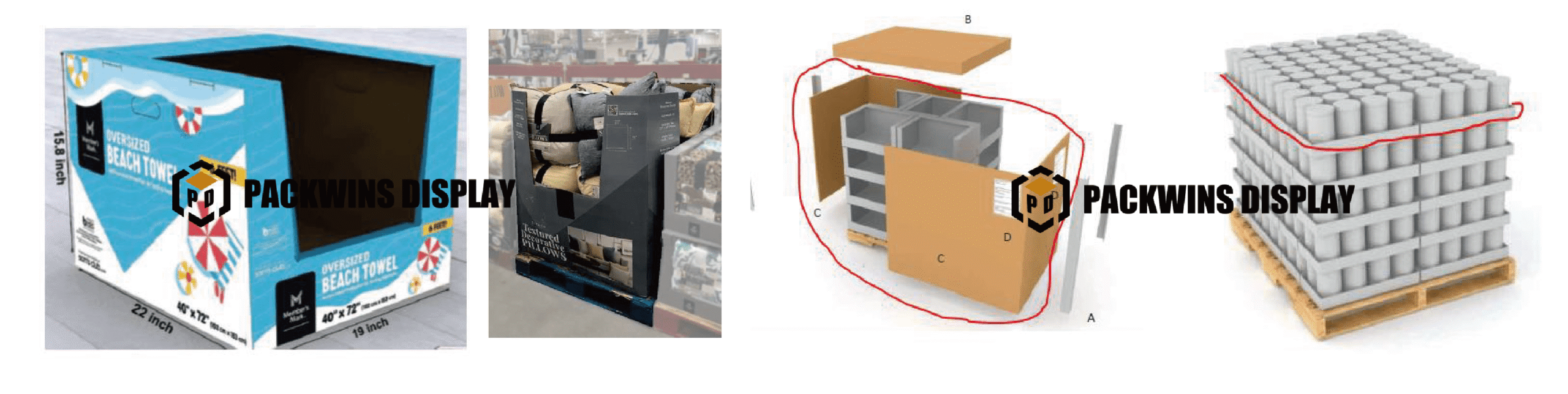
- Primary packaging (Closed box/Open box/ Brown box)
- Packaging component (PDQ/dump bin, HSC, shroud boards, layer trays, …)

Requirment for Report Format
| L(cm) | W(cm) | H(cm) | Volume(CBM) | Weight(KG) | |
|---|---|---|---|---|---|
| Intake Sheet | 45.7 | 39.6 | 41.36 | 0.0749 | 262.35 |
| Quoted Sheet | 45 | 39 | 41 | 0.0720 | 262.35 |
| ISTA Sample | 45 | 40 | 30 | 0.0540 | 266 |
| CBM variation test sample to quoted sheet (+/-5%) | Weight variation test sample to quoted sheet (+/-5%)- | ||||
| 24.95% | 1.39% |

ISTA 6 Test Items


ISTA 6 SAMSCLUB For SAMSCLUB US Mexico and China order.

Your package type determines the exact tests it will face. Classifying it incorrectly leads to the wrong tests and an automatic failure. Let's define the package types to get it right.
ISTA 6 SAMSCLUB Package Types
The test begins by classifying your package as Type A (palletized), Type B (large floor-loaded case), or Type C (small floor-loaded case). This classification dictates the specific sequence of drops, impacts, and vibrations your product will endure during the official test procedure.
Type A
Non-Perishable, initially Shipped on a Pallet or Slipsheet (Club Ready Package)

Type B
Floor-Loaded Single Case - Large type
- Weighs 50lbs (23kg) or more
- The longest dimension is 24in (610mm) or greater and the next-longest dimension is 20in (510mm) or greater and the shortest dimension is 20in (510mm) or greater
- Any of the length, width, or height dimensions are 30in (760mm) or greater
Type C
- Floor-Loaded Single Case - Small type
- If it does not meet the definition of Type B (Large Type)
Elongated packaged product
A packaged-product where the longest dimension is 36in (910mm) or greater and both of the other dimensions are each 20 percent or less of the longest dimension.

Flat packaged product
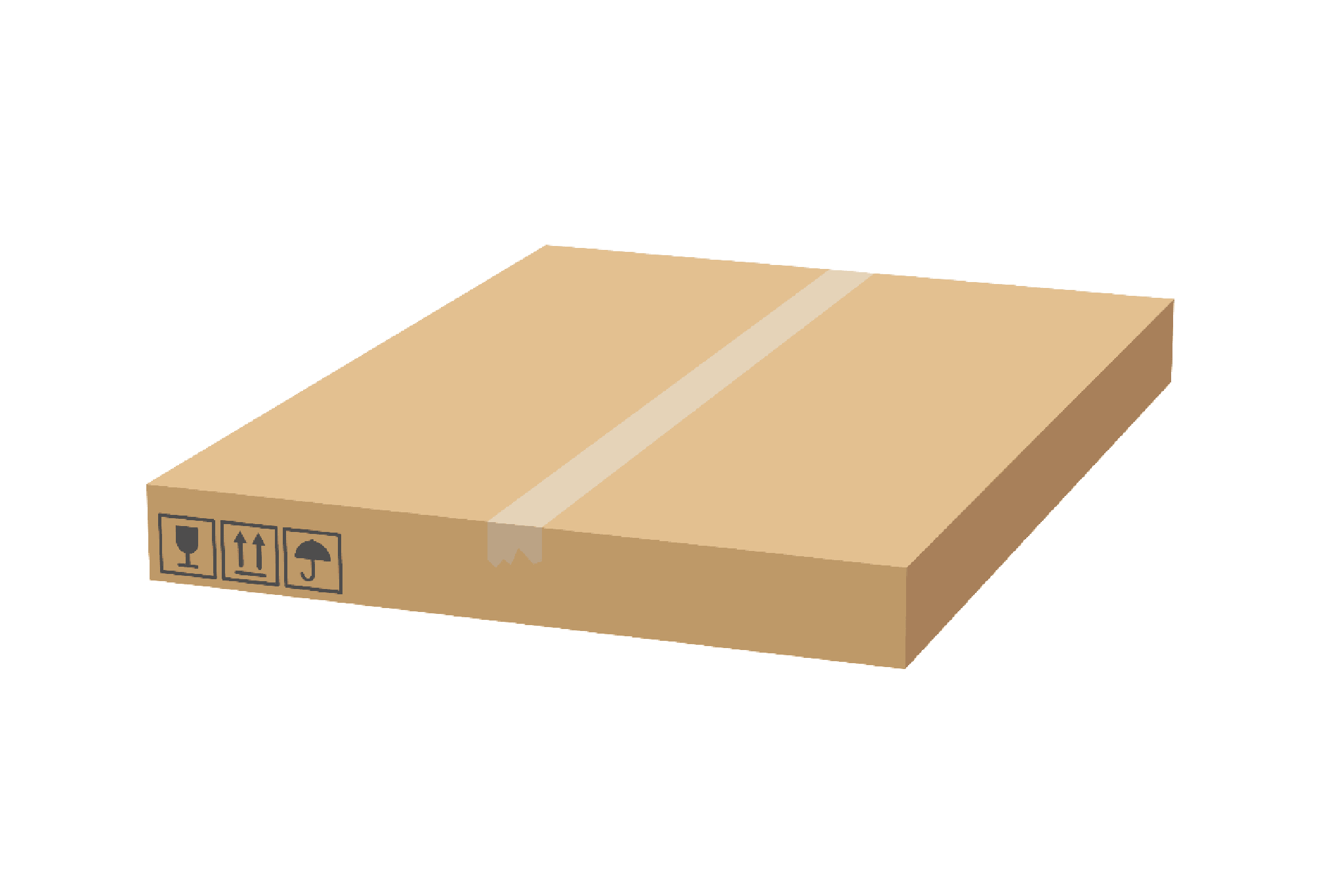
- A packaged-product where the shortest dimension is 8in (200mm) or less
- The next longest dimension is 4 or more times larger than the shortest dimension
- The volume is 800in3 (13,000cm3) or greater

| Package Type | Definition |
|---|---|
| Type A | Non-Perishable goods shipped as a "Club Ready Package," meaning they arrive on a pallet or slipsheet. |
| Type B | A single, floor-loaded case that is considered "Large." It must meet at least one of these: weighs over 50 lbs, has dimensions over 24"x20"x20", or any single dimension is over 30". |
| Type C | A single, floor-loaded case that is considered "Small" because it does not meet any of the definitions for Type B. |
Sam's Club Testing Method and Parameters
Sam's Club requires testing for the entire shipping unit. This includes the primary product packaging and all secondary packaging components. This means your retail displays, like PDQs, dump bins4, shrouds, and trays, must be part of the test.
Identify Corner, Edge, Face
▪ For club ready packaging, packaging with up arrow marking or has a single shipping orientation. Place it in that orientation。
▪ Otherwise, place it in most stable orientation (largest face down)

First Free-fall Drop

Second Free-fall Drop

Incline Impact
Type A and Type B
Test orientation should refer to the loading plan
4 faces or 6 faces at 42 in/sec impact velocity

Rotational Flat Drop
Type A and Type B
Test orientation should refer to the loading plan.

Vertical Compression
• Pallet weighing ≤750lbs - bottom layer must support 1,500lbs (680.39kg)
• Pallets weighing more than 750lbs (340.19kg) – bottom layer must support 2,500lbs (1133.98kg)

Type A

Type B&C
Pallet required for upper surface area ≥ 45in×37in
F (lbs) = [(108-H)/H] x WG x M
Test orientation should refer to the loading plan
The maximum force should not exceed 7,500lbs

Vertical Vibration
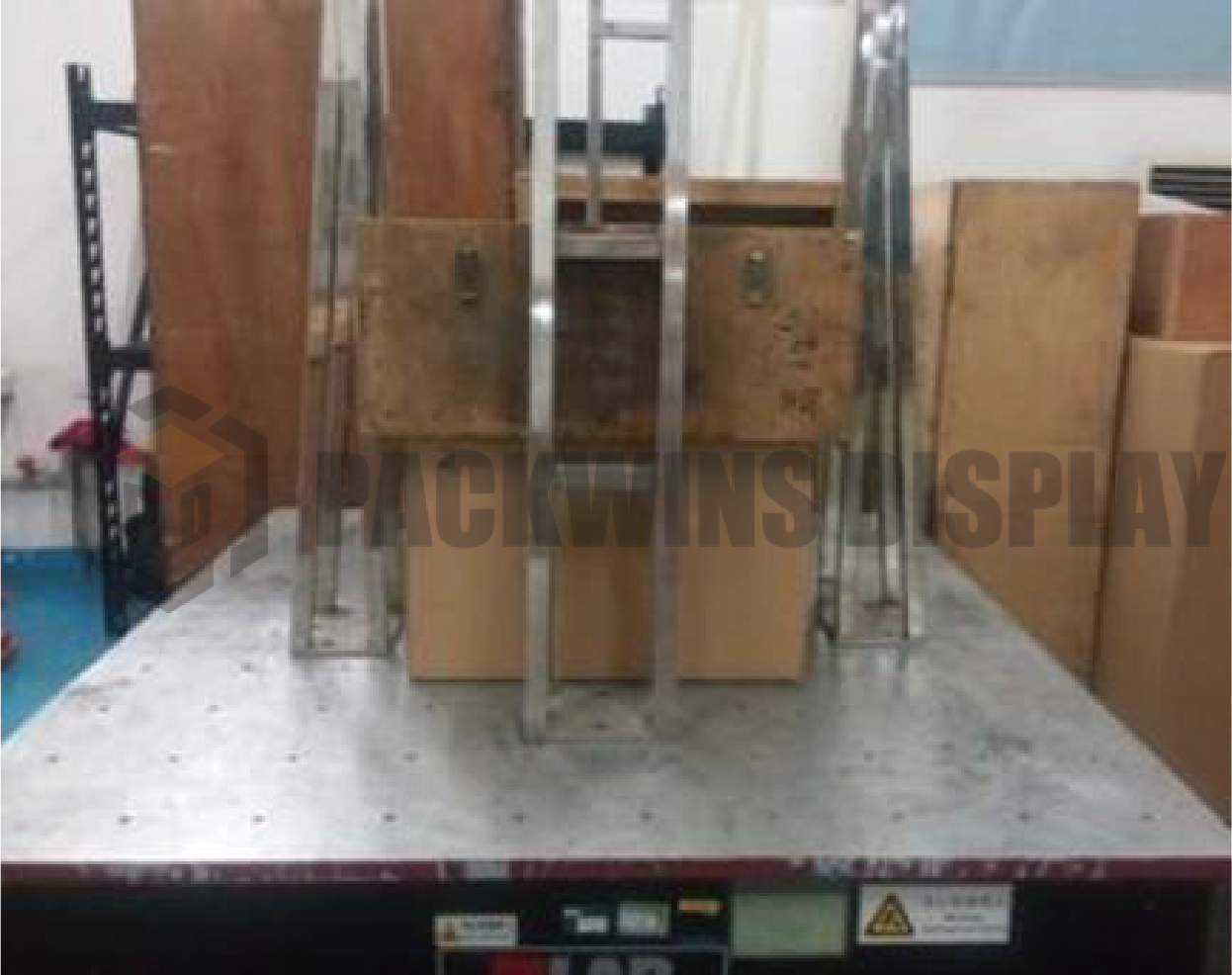
Type A: Maintain for 3 hours without top load

- Vibration with top load for 3 hours per possible orientation
- Top load (lbs) = [(108-H) x L x W x 0.0035
- Test orientation should refer to loading plan


Clamp Test
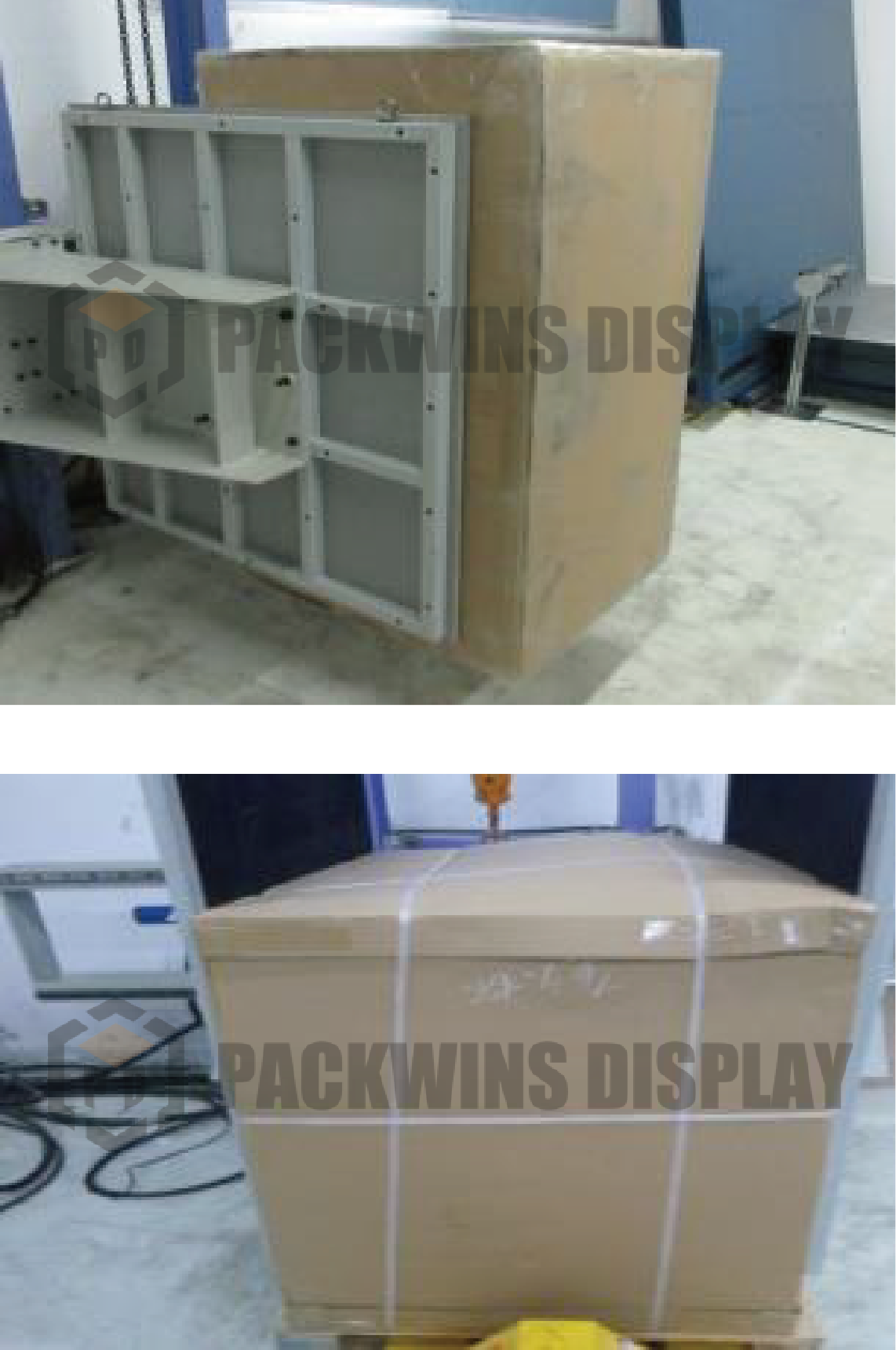
- Clamp offset 3 inch from front and bottom and lift up then down and release. Repeat for total 5 cycles. Test orientation should refer to the loading plan.
- Test Force (lbs) = 4.5 x W x 48/D W - the test item weight (lbs) D - the smallest dimension based on tested side /
- Min. clamp test force – 400lbs (Type B, C)
Min. clamp test force – 1000lbs(Type A)
Max. clamp test force – 2300lbs

Rotational Edge Drop
Type A and Type B
Test orientation should refer to loading plan

Concentrated Edge Impact
Type B and Type C Required only on flat packages

Bridge Impact
Type B and Type C Required only on elongated packages

Flat Push
For custom pallet only
Push 40 in in 2-3 sec

Loading Plan
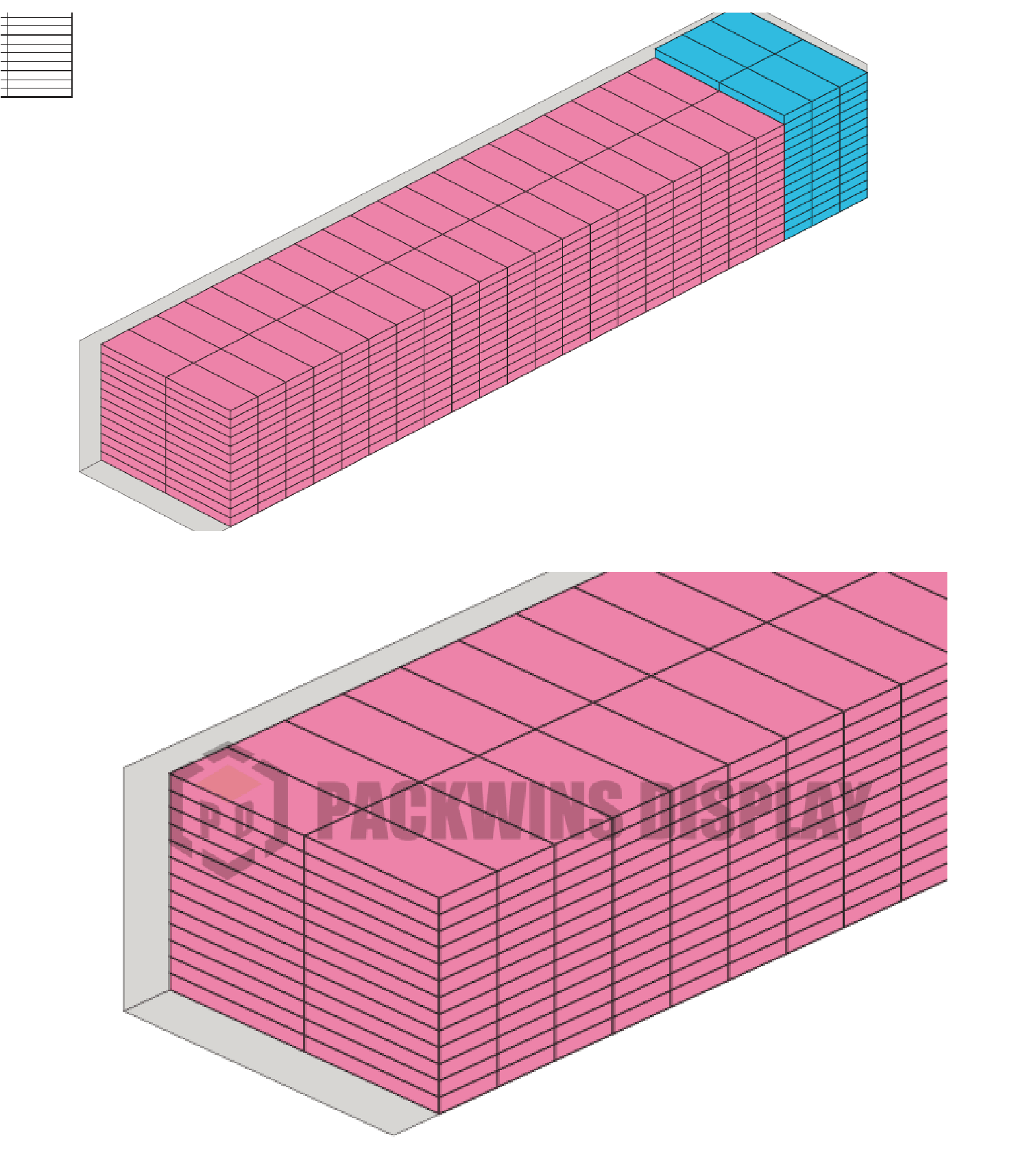
One shipping orientation
- Compression test for 1 direction
- Vibration test for 1 orientation (3 hours)
- Clamp test on 4 side faces
- Incline impact
- Rotational edge drop
- Rotational flat drop

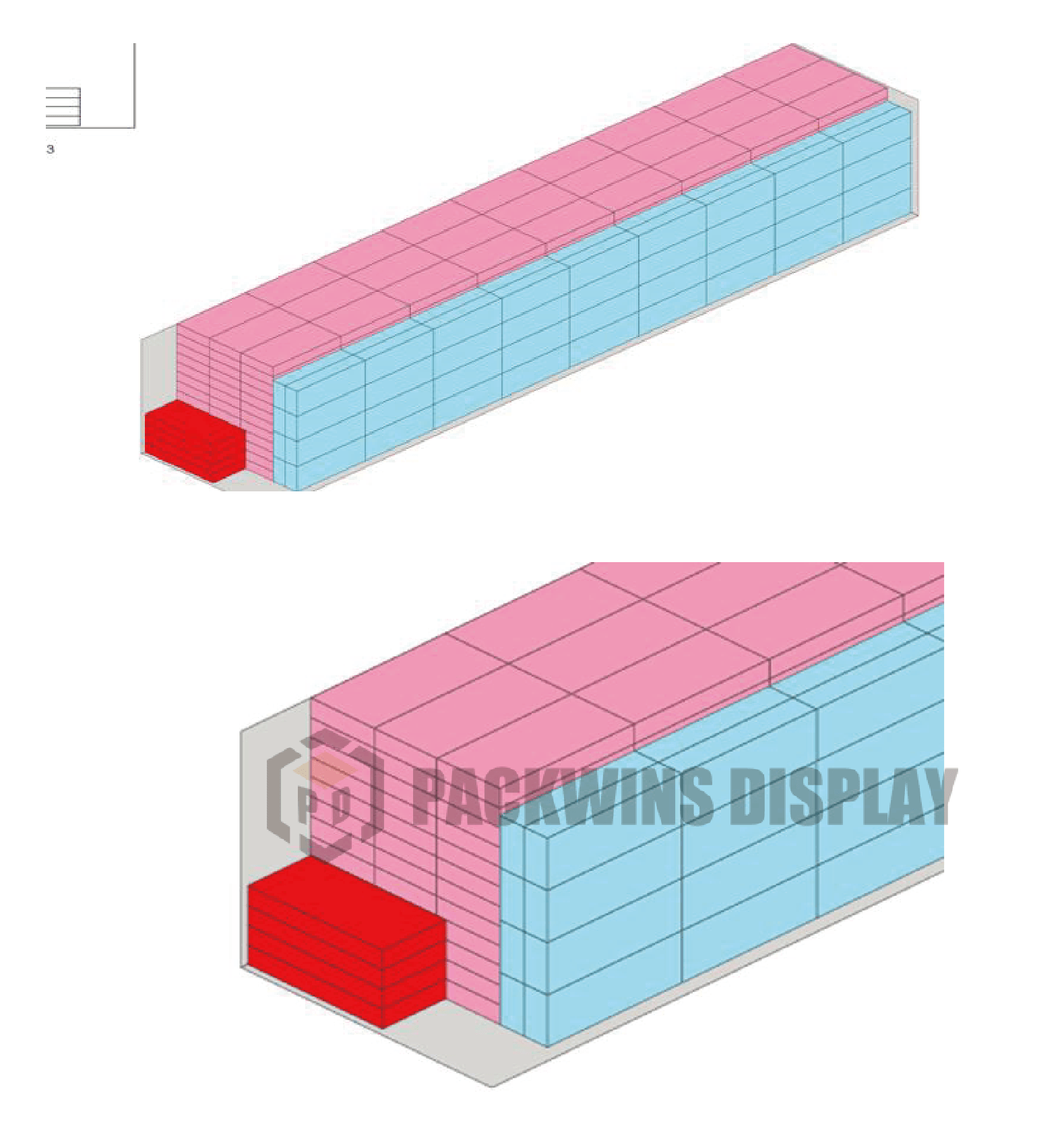
Two shipping orientation
- Compression test for 2 directions
- Vibration test for 2 orientations (6 hours)
- Clamp test on all faces
- Incline impact
- Rotational edge drop
- Rotational flat drop

Three shipping orientations
- Compression test for 3 directions
- Vibration test for 3 orientations (9 hours)
- Clamp test on all faces
- Incline impact
- Rotational edge drop
- Rotational flat drop
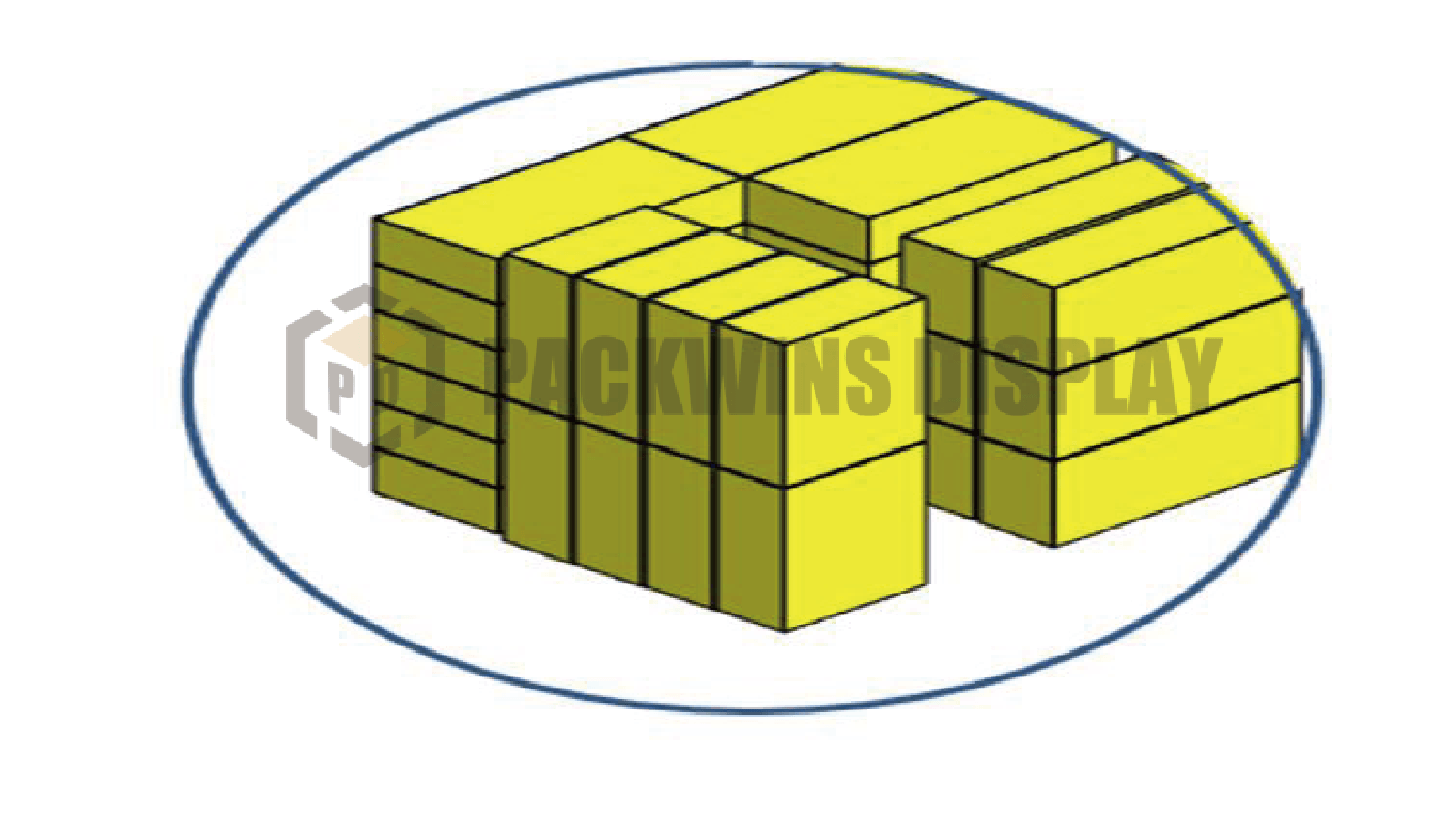

All these floor-loaded packages should be reassembled to club-ready models, then handled by a clamp truck. More time and labor are needed for these floor-loaded packages. Therefore, the same orientation in the container will be more convenient than different orientations.
Rub Test
- Blank box – must do rub test on final package
- Full-colored box – no need to do a rub test
- Final printing box – no need to do a rub test
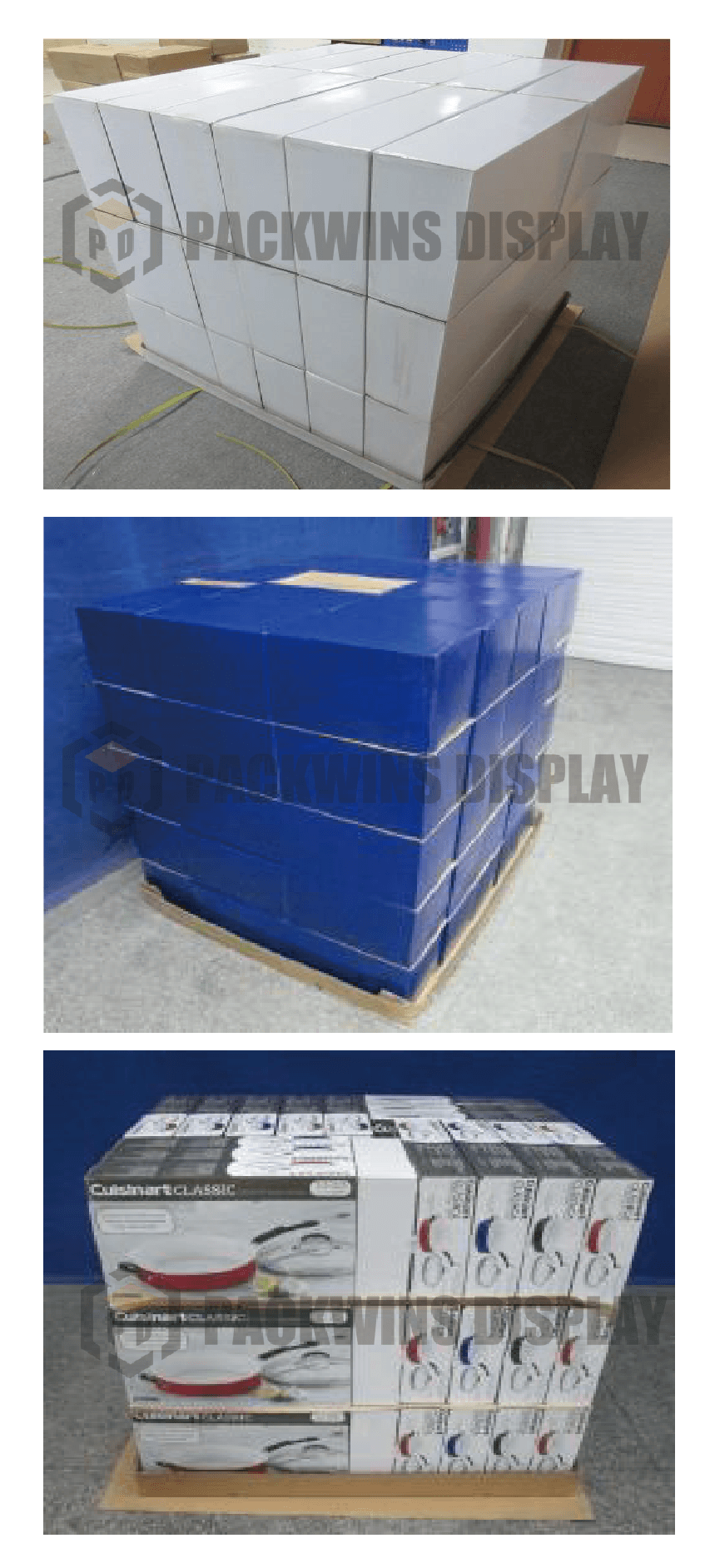

All items that using blank box to do transit test must be tested with new official rub test at lab directly. Other items should to do rub test as per request by buyer.
• Test method: ASTM D 5264 Receptor block: 4 lbs Speed: 42 cycle per minute Times: 200 stokes • Evaluation: If there is greater than 2% of the printed test sample transferred to the blank paper, the sample failed the test.
Retail Displays as Packaging Components
The ISTA 6-Samsclub test1 is concerned with the performance of the total package. This includes any and all materials used to get the product from the factory to the club.
| Component Type | Role in the Shipping Unit |
|---|---|
| Primary Packaging | The box or wrapper the final customer buys (e.g., a closed box, open box). |
| PDQ / Dump Bin | The retail display structure that holds the product on the sales floor. It must survive transit. |
| HSC (Half Slotted Container) | Often used as a base or tray for a display. It's a key structural part. |
| Shroud Boards / Layer Trays | Used to separate layers of product or to create the outer wall of a pallet display. |
What is a "Club Ready Package"?
This term, used for Type A packages5, refers to a fully assembled pallet display. The product, the display structure, and the pallet are all treated as a single unit. The test simulates this entire unit being moved, stacked, and handled through the Sam's Club system. If you are shipping a full pallet display, you must test the full pallet display.
Conclusion
Understanding and preparing for the ISTA 6-Samsclub test1 is non-negotiable. By following these requirements, you protect your product, prevent delays, and ensure a successful launch at Sam's Club.
Understanding this test is crucial for ensuring your product meets Sam's Club's strict shipping standards. ↩
This test simulates real-world forklift handling, ensuring your packaging can withstand transit pressures. ↩
Learn how this test ensures your packaging's artwork remains intact during transit, maintaining brand image. ↩
Dump bins are part of the shipping unit and must be tested to ensure product protection during transit. ↩
Understanding Type A packages helps ensure proper testing for palletized goods, crucial for compliance. ↩


