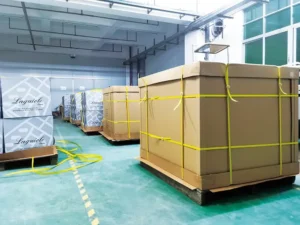
Getting into Walmart or Costco seems impossible. The complex packaging rules1 can stop your great product cold. We can guide you through it and make the process simple.
The key is meeting their strict secondary packaging and in-store display requirements2. This means creating custom cardboard displays3, like pallet displays or PDQs4, that are designed for their specific store environment, your product, and your brand.

I remember a client with an amazing new snack brand. They had a deal with a major retailer, but the store rejected their initial display plan. They were stuck, and their launch was at risk. This is a common story, and it's why understanding the process is so important. Let's break down exactly what you need to know to succeed and avoid these costly mistakes.
What Are The Major Big Box Stores in the USA?
You want to sell in the US, but the market is huge. Where do you even start? It can be overwhelming. Let's focus on the biggest players where your product can shine.
The major big-box retailers in the USA5 include Walmart, Costco, Sam's Club, The Home Depot, and Target. Each has unique customers and, more importantly, specific requirements for in-store product presentation that you must follow.

Understanding where your product fits best is the first step. Each of these giants serves a slightly different customer, and your display needs to match that environment. For example, Costco and Sam's Club are "club stores." They sell in bulk and products move directly from the truck to the sales floor on a pallet. Your display is the pallet. Walmart and Target have a mix of pallet displays and smaller shelf displays, known as PDQs (Product Display Qualifiers). The Home Depot is all about DIY customers, so displays need to be tough and communicate value quickly. As a designer and manufacturer, we always start by asking, "Which store are you targeting?" because the answer changes everything about the design.
| Retailer | Primary Customer | Common Display Type |
|---|---|---|
| Walmart | Budget-conscious families | Pallet Displays, PDQs, Sidekicks |
| Costco | Bulk buyers, small businesses | Full Pallet Displays |
| Sam's Club | Bulk buyers, families | Full & Half Pallet Displays |
| Target | Style-conscious shoppers | Endcaps, PDQs, Inline Displays |
| The Home Depot | DIYers, contractors | Pallet Displays, Power Wings |
What Are the Secondary Packaging Guidelines of Major Big Box Stores?
You've picked a target store, but their vendor manual is a nightmare. It's hundreds of pages long. Violate one rule on structure or dimensions, and your shipment gets rejected.
Most big-box stores require products in shelf-ready packaging (SRP)6 or on pre-packed displays. Key guidelines focus on structural integrity7 to prevent collapse, easy setup for store staff, clear branding, and specific pallet dimensions, especially for club stores.

Over the years, we've learned these rules by heart. They aren't just suggestions; they are strict requirements for getting your product on the floor. We focus on three core areas to ensure compliance every time.
Structural Integrity
The display must survive shipping and support your product's full weight on a busy sales floor. For club stores like Costco, this is non-negotiable. They require displays to pass rigorous ISTA (International Safe Transit Association) tests. We use high-strength corrugated board (like 200# or 275# test) and design internal supports to guarantee the display won't fail. A collapsed display is a lost opportunity and can damage your relationship with the retailer.
Assembly and Labor
Store employees are busy. A display that takes 30 minutes to set up will be ignored. Most retailers, especially Walmart, require displays to be assembled in under 5 minutes with no tools. We design our displays to be intuitive. They often pop open or have simple, pre-assembled components. This "ease of use8" is a major selling point to the retail buyer.
Pallet & Shipping Requirements
Each retailer has its own "footprint." Costco exclusively uses 48"x40" pallets. Your display cannot overhang these dimensions by even a millimeter. Walmart is a bit more flexible but has clear rules for how displays must be stacked and wrapped for their distribution centers. We design within these constraints from the very first sketch to ensure there are no surprises during shipping.
How Do We Custom Design a Cardboard Display for Your Brand?
You know you need a custom display, but the process seems complex and expensive. You worry about getting the design wrong. We make it a simple, collaborative, step-by-step journey for you.
We custom design displays through a four-step process. We start with a deep dive into your product and brand, create 3D design mockups, build a physical prototype for testing, and finally move to full-scale production and delivery.

Our goal is to make this easy for you. As your partner, we handle the technical details so you can focus on your brand and product. Here is how we do it.
Step 1: Consultation & Discovery
First, we talk. You tell us about your product: its size, weight, and how it's packed. You tell us about your brand, your campaign goals, and your target retailer. This is the most important step. We need to understand your vision completely.
Step 2: Structural & Graphic Design
Next, our engineers and designers get to work. Using the information from our consultation, we create a 3D structural model. We ensure it's strong enough and meets all the retailer's guidelines. At the same time, our graphic designers apply your branding to make it stand out. We send you these 3D renders so you can see exactly what it will look like.
Step 3: Prototyping & Testing
Once you approve the 3D design, we create a full-size, physical prototype. We ship this to you. You can assemble it, load it with your actual product, and see it for yourself. This step is critical. It allows us to catch any potential issues before we produce thousands of units. It saves you time and money.
Step 4: Production & Logistics
After you approve the prototype, we move to mass production. Our quality control team checks every batch to ensure it matches the approved prototype. We can then ship the flat-packed displays directly to your co-packer or distribution center in the USA, UK, or Australia.
What Common Mistakes Should You Avoid When Designing Displays?
A failed display costs you money, time, and your retail partnership. These mistakes are very common, but they are also easy to prevent with the right planning and expertise.
Avoid using weak materials9 that can't hold your product's weight. Don't create complex designs that are hard for store staff to assemble. Also, ensure your branding is clear and doesn't get lost on a busy retail floor.

I've seen brands invest thousands in a promotion only to have it fail because of a simple design flaw in their display. Learning from these mistakes is key. We help our clients avoid them by focusing on the fundamentals from the start. A successful display is a balance of strength, branding, and simplicity. Getting one of these wrong can ruin the entire project. Here are the most common problems we see and how we solve them for our clients.
| Common Mistake | Our Packwins Solution10 |
|---|---|
| Weak Structure | We calculate the total product weight and choose the correct corrugated board strength and flute type. We engineer internal supports to prevent sagging or collapse. |
| Confusing Assembly | We design for simplicity. Our displays are intuitive, often with numbered steps or color-coded parts. We aim for a tool-free, sub-5-minute setup time. |
| Poor Branding | Your brand message should be at eye-level. We design a clear visual hierarchy, placing your logo and key message where shoppers will see it, not near the floor. |
| Ignoring Retailer Rules | We are experts in retailer guidelines. We design within the exact height, width, and depth limits from day one, ensuring your display is compliant upon arrival. |
Theory is good, but you want to see real-world results. You need proof that a great display can actually move the needle. Here is how we helped a brand just like yours succeed.
Yes. We worked with a beverage company launching a new energy drink into Sam's Club. We designed a full pallet display that was structurally sound, easy to shop from, and had powerful branding. The campaign resulted in a 30% sales lift.

This client came to us with a fantastic product but no experience with club stores. They needed to make a huge impact right away.
The Challenge
Their energy drink was sold in 12-packs. The cases were heavy, and they needed to display a large volume of products on a single 48"x40" pallet. The display had to be strong enough to hold over 1,000 lbs of product while also being attractive and easy for Sam's Club members to shop from all four sides.
Our Display Solution
We designed a "four-sided shop-ability" pallet display. We used a triple-wall corrugated base for maximum strength and created tiered layers that made it easy for customers to grab a case. For the graphics, we used bold colors and a large, simple message on a header card that could be seen from across the store. The entire display was designed to ship fully loaded and arrive ready for the sales floor.
The Results
The launch was a huge success. The retailer was happy because the display was compliant and easy to handle. The brand was thrilled because the display's powerful presence on the sales floor led to a 30% increase in sales velocity compared to their initial forecast. They secured a reorder for the next promotional cycle. This is the power of a well-executed display.
How Can You Start Your Custom Display Project with Packwins?
You're ready to take the next step into big-box retail but don't know where to begin. You need a clear, simple starting point. Let's make it easy to get started today.
Starting is simple. Visit our website, Packwins.com, and fill out our contact form. Provide us with your product details, and our team will reply within 24 hours to schedule a free consultation.
Packwins website contact page screenshot
We want to hear about your project. The more information you can give us, the faster we can provide you with an accurate quote and design ideas. To make the process as smooth as possible, it's helpful to have a few details ready when you contact us. This allows our team to come to our first meeting with concrete suggestions and solutions tailored specifically for you. Don't worry if you don't have all the answers; we can help you figure them out.
Here’s what’s most helpful for our first conversation:
- Product Details: What are the dimensions (L x W x H) and weight of a single unit?
- Case Pack Info: How many units are in a master carton? What are its dimensions and weight?
- Target Retailer: Which store are you aiming for (e.g., Walmart, Costco, Target)?
- Display Quantity: How many displays do you think you will need?
- Your Vision: Do you have any ideas or examples of displays that you like?
With this information, we can begin the journey of creating a custom display that will get your product noticed and purchased in the biggest stores in the USA.
Conclusion
Getting into big-box stores is about a great product and the right display. We can help you with the display, making your retail launch a huge success.
---Understanding the complex packaging rules is crucial for successfully getting your product into major retailers like Walmart and Costco. ↩
Meeting secondary packaging and in-store display requirements is key to ensuring your product is accepted by big-box retailers. ↩
Custom cardboard displays are essential for aligning with store environments and enhancing brand visibility in big-box stores. ↩
Pallet displays and PDQs are common display types in big-box stores, crucial for effective product presentation. ↩
Knowing the major big-box retailers helps in targeting the right market for your product. ↩
Shelf-ready packaging is vital for ensuring products are easily accessible and visually appealing on retail shelves. ↩
Ensuring structural integrity prevents display collapse, protecting your product and maintaining retailer relationships. ↩
Displays that are easy to assemble save time for store staff and increase the likelihood of being used. ↩
Using strong materials prevents display collapse, ensuring product safety and retailer satisfaction. ↩
The Packwins Solution offers expert guidance and design to ensure your display meets all necessary requirements. ↩